I hear that you, my loyal readers and followers, are wondering where I've gone of late. No, I haven't been eaten by fierce wild beasts, or run over by a tram, or run off to Narnia with a talking horse (though you'd better believe I'd do the last, had I the opportunity!).
No, being a pilgrim in the land called University, I've been mired in the Slough of Studying followed by the fierce Battle of Midterms, in which I was obliged to encounter the foe thrice on Wednesday and twice today.
Clearly, however, I am feeling literary, and so I shall be posting at first opportunity this weekend. I have so many photos, and I am under directions to post a rather excellent rant (er, critical analysis) by the person whom I originally favored with said gem, and so, you have much to anticipate. Especially if I can fix the internet at my host-house and not have to post from cafes, where they insist on my purchasing something, and everything is untenably overpriced.
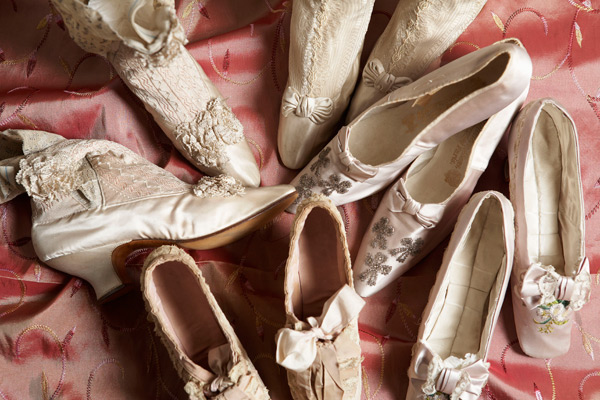
From: http://arttattler.com/archiverussiancourtprotocol.html
Thursday, March 8, 2012

Monday, February 27, 2012
La Vie Quotidienne
What do I do every day in Brussels, when I’m not on fabulous
expeditions, you might wonder? Well,
it’s an interesting question, with varied answers.
I have any number of tales of strange and varied lands to
regale you, my lovely readership, with, but as they will take some time to
assemble and to select photos for, let me tell you first that Holland is so beautiful, second that Antwerp is
pretty cool, third that Mardi Gras in Binche is quite the experience, and
fourth, the answer to the question posed above, to keep you busy until I can
elaborate on one, two, and three.
Sometimes, I explore the Belgian and Francophone views on
things American. They are clearly
sometimes very wise people. (More often, I disagree with them strongly, but that's another matter...) Below, you can see the cover of a magazine that arrived at my host-house and was sitting on the entry-hall table when I came in one afternoon, causing me to convulse with laughter. The title says, "Who Can Beat Obama?: The Republicans and the Search for the Ideal Candidate." The captions read, counterclockwise from top left: "Radiant Optimism of Reagan,""Oratorical Talents of Lincoln," "Muscles of Schwarzenegger," "Compassionate Conservative Heart," then an idiom I have difficulty translating, but it's something along the lines of "Guts of Teddy Roosevelt," followed by the startlingly clear Cojones de Palin, "World-Travelling (Feet) of Kissinger," then Libido de Cain flung unceremoniously into the trashcan, "Iron Fist of Thatcher," "Hardware (indicating the war medals) of Eisenhower," "Intellectualism of Buckley," and something like "Brain of Nixon - without the less worthy instances." The tattoo reads "Free Enterprise," and the book is by Milton Friedman.
 |
| Isn't it remarkable how slim some language barriers can be? |
Sometimes, I make calendars.
Or rather, I decide that 6 or 7 euros for a calendar, in the middle of
February, is perfectly ridiculous. Graph
paper and large paper clips are wondrous things.
 |
| As are random wires poking out of the ceiling. |
Sometimes, I make art.
I call this “View From My Window – Brussels.” It is an interpretation of
design motifs seen through, and a bit of the snow seen on, my actual window,
with a heavy dose of homage to Art Nouveau design, which is characteristic
here. Someday, when I haven’t left all
my colored pencils on a different continent, I hope to add color to it.

 |
| (This is the actual view from my window, though the details don't show.) |
Sometimes (although several weeks agone, now) I go to Super
Bowl Parties with the young crowd of St. Andrew’s Church of Scotland. Sometimes, (it’s not gambling if you don’t
lose stuff, you only win stuff, right?) we guess the scores at the end of every
quarter by filling in a grid with our initials.
And sometimes, as evidenced by the two large chocolate bars and the nice
sampler of Leonidas “pralines” (we would call them truffles) that rested on top
of my desk next to the antique saint for nearly two weeks, I manage to
correctly predict the halftime, third-quarter, and ending scores correctly, all
the while without being quite sure what is going on or why I should care. I just guessed combinations of the numbers in
my birthdate, personally…and then copiously enjoyed my (Providential) chocolate.
Sometimes, I read – so far, I have finished P.D. James’ Cover Her Face, Elizabeth Gaskell’s North and South, and Gene
Stratton-Porter’s A Girl of the
Limberlost. (Kindle is a fabulous
thing, in its way, though it is not quite so satisfying as turning tangible
pages. Chocolatey fingerprints do clean
off of it better, though, on the upside.) I spent a week debating what of several works
I should read next, and have solved the issue by reading about Nazis and murder
at the same time. (I know, how
cheery!) But the murder is Death on the Nile, of course by the venerable
Dame Agatha Christie, so it really is highly amusing and enjoyable. As to the Nazis, I was in Amsterdam with the
Art class this weekend, and one of the places we went was the Anne Frank
museum. It occurred to me in the train
on the way there that I had never actually read Anne Frank’s diary, so it was
Kindle-to-the-rescue, and my downloaded copy of the tales from the Secret Annex
came flying through cyberspace onto a moving train en route to the Netherlands. Modernity does occasionally have its wonders. I made up for this by reading the Christie on
the way back, though, and I have determined that nothing can quite compare with
the classic romance of reading a real-book detective story on an evening train speeding somewhere through Europe.
Oh, and sometimes, I do homework. Actually, who am I kidding. I do a lot of homework. But I enjoy most of it, and the stack of
books looks so impressive atop my little blue bookcase with the bears. I am sure that they, the bears, must think
that I am quite the academic. More
credit to the bears!
Sunday, February 19, 2012
Every Ring of Chainmail...Bruges!
Two Saturdays ago now, I had the privilege of touring Bruges with my art history class. It was absolutely frigid. Bone-chillingly cold. And also breathtakingly beautiful.

The canals, usually populated by boat tours, were frozen
solid, except for pools ‘round the edges where white swans and black cormorants
floated and bobbed, and the ice reflected back the brightness of the sun and
the blueness of the sky until there was such a riot of sparkle and a glow of
gold that I almost forgot how long it had been since I’d felt any sensation in
my ears.
 |
| Frozen Canal |
On the scale of sheer grandeur, my favorite was probably the
house-palace of Louis Gruuthuse, of a merchant family turned aristocratic. He once entertained the king of France in his
personal house. He had a sculpture of
himself on horseback, a position typically reserved for royals, mounted over
the lintel of his door. And, he had a
personal, enclosed catwalk made that soars from his house across a side-street
and directly into his own private compartment balcony at the front of Our
Lady’s Church, which still bears his decidedly humanistic motto, “plus est en
vous” – more is in you.
 |
| Mr. Gruuthuse lived here (note horse, bottom right) |
 |
| And got to church here (note stone catwalk, just under the buttress) |
On the side of quirk, I found this fantastic horse fountain,
and snapped it with the very last shot before my camera battery gave up the
ghost completely. He’s so adorable and
goofy and horsey, isn’t he? I want one in my country-house garden
someday.

 |
| The Belfry, atop the edge of the Clothhall |
As much of Bruges is actually old as is nineteenth-century
restoration, made to look old. Among the
actual old ones are the Clothhall and Belfry, below and left. The bottom part, the large building, is the
thirteenth-century clothhall, where medieval merchants brought imported wool
from England, and workers took it away, then brought it back as finished cloth
to be exported for profit. The very
bottom part of the belfry is thirteenth-century as well. Now personally, I always thought that only a
church had a belfry, but apparently I was quite wrong. The word comes, etymologically, from the
wooden frame that suspends the bells inside their stone tower, and a belfry was
actually symbolic of a medieval town’s independence. Villages that were part of a fief were not
allowed to have their own non-church belfry, but all the towns which were
granted independent charters were granted one, to sound alarms or celebrations
or the like on their own. This belfry
was built up to the top of the square part in the fourteenth century, and the
very tallest part was added in the fifteenth century, so altogether it
represents three hundred odd years of prosperity and independence in Bruges.
 |
| The Clothhall, with the edge of the Belfry |

And, on the order of not very old at all but completely fabulous, here is the nineteenth-century neo-Gothic interior of the Chapel of the Holy Blood. Theoretically, one of the Counts of Flanders who went on Crusade in the twelfth century brought back a relic of the Holy Blood, meaning Christ’s own. It played an enormous role for quite some time in attracting pilgrims, who were of course good for the economy and decent for settlement, to Bruges, rather aiding its prosperity and prestige. The supposed relic itself is on display during the day, and frankly looks like not much in a very shiny case, but the chapel around it is a magnificent living fantasy of a church. Sidenote: A sign above the entrance expressly forbids photography. After about two dozen other tourists had blatantly violated this request, well…it was simply too good to miss, and I turned off my flash…
 |
| It's all painted, in the most vivid colors... |

When it’s not on display, the relic of the Holy Blood lives
in this enormous sparkly case at right, which I thought was a worthy art piece unto
itself.
And there was, of course, the part of the trip that led to
the title of this post: the Jan Van Eyck
paintings in the Groeninge Museum.
(Sadly, my camera was dead as a doornail by the time we saw the Hans
Memling museum in medieval St. John’s hospital later in the day, but Van Eyck
was more amazing, anyway, or at least, the selections we saw were.) Also sadly, I apparently didn’t think to take
a close up of the exact chain mail in the post title. Nevertheless, the Van Eycks were
incredible. Art in museums is tough to
photograph well, and I usually prefer to spend my time looking at it without a
view-finder, but for the sake of you, my well-loved and recently post-deprived
readers, I snapped a few pictures of one of the most famous Van Eycks. The detail that one can see in person in
this painting is incredible. It’s better
than a photograph, because the colors are all luminous and intense, making it
seem grander, almost hyper-real in a way that really makes you stop and pause
for breath. Then, you begin to wrack
your brains wondering how on earth anyone ever had the patience and skill to paint this! Here is first a view of the whole painting,
followed by a close up of the hem of the Virgin’s robe, with its pearl and
jewel trim.


In person, it looks so life-like and three dimensional that I
did a double-take, at first thinking, “Is that a real beaded ribbon?” It is
so deceptively like a mixed-media work – you can see the roundness of the
beads, so much so that you believe if the glass weren’t there, you could touch
them and they must really be spheres.
Not pictured in like manner, malheuresement, is the knight’s chain mail skirt (for lack of a
better word). The edge of his tunic,
perhaps? Whatever you call it, it is
stunning. I took a magnifying glass and
stared into it, and, do you know, you can see every single ring, in full? They are so tiny, maybe an eighth-inch high
each, and Jan Van Eyck managed to paint every edge of every one, and the
minuscule shadows where they overlap one another, and the differing lights on
the ones that fall outwards or recede into the folds of the metal fabric. It is absolutely impossible, but it’s true.

 And this at right is early twentieth century. I just happened to adore it. The colors are so light and bright and morning-like, in person. And when you stand back, the strokes that look too harsh here blend into such a pretty, atmospheric, hazy-summer-morning effect. We were supposed to walk right by this one in the quest for things medieval and Renaissance, but I simply couldn't. I just ran to catch up later.

And this bottom, the one with the dancing shoes, was just posted along an alleyway that we walked through, charmingly.
Stay tuned, dear reader! (I've always wanted to say that - "dear reader.") Plus est pour vous...
Friday, February 17, 2012
The Sound of Language (and Literature)
While that sound of music that Julie Andrews-Von Trapp (that is her name, isn’t it?) sings of is a favorite sound of mine, capable of expressing many things that words cannot, I have been thinking much more recently upon the sound and the sense of language, and those very expressions in concrete words.
There is an obvious sound to a language – those
characteristics that allow Danny Kaye in The
Court Jester (a fabulous, extremely silly old film. If you haven’t seen it, then you should. But, carrying on - ) those sounds which allow
Danny Kaye to so glibly mimic French, German, Italian, and maybe some others by
spewing a series of nonsense syllables that make the expected noises of each
language. Certain combinations of sound
stand out to the ear – “ein” sounds German, “oglio” Italian, and the like.
But there is a broader sound of language, something in the
rhythm of the speech, which can so denote a language and its native speakers
from others. Even on the odd occasion
when I manage to pronounce more than half of my French words correctly in any
given sentence, it is this rhythm, which, as a non-native speaker, I blithely
disregard, inserting pauses where there are too many syllables for my English
tongue, or where there is a comma in my English thought process, regardless of
whether there should be one in the French phrase. (And almost all native speakers think with the proper punctuation, which
is why it remains a mystery to me that so few of them can write it.)
It is also this latter pronunciation that makes me prefer
Dutch to French, in terms of how it strikes the ear. You see, the north of Belgium, Flanders,
speaks Flemish, a variety of Dutch. The
relationship between the two is said to resemble English and “American”; that
is, they use mostly the same words, with a few irregularities in spelling, and
they each think the others have a funny accent, though rarely enough so to
impede comprehension. In the south,
Wallonia or Wallonie, they speak
French. Naturally, funny accent syndrome
occurs again when compared to French-from-France. I am confessedly over here largely to learn
French, which I am continuing because after a body has devoted two years to a
language, she might as well go on with what she started. And in this case, she started because she was
driven mad in the eighth grade by a little French child called Adele in Jane Eyre, who would go on in French for
paragraphs, without feeling the need to provide a translation. Literarily motivated, then, I chose French
because it occurred often enough in written work that I felt I was at a
disadvantage without it. Written, it is
an elegant enough language, with all of its vowels and symmetrical double
letters. And of course, it’s the language of beauty and art and
culture and romance, right?
Well, shoot me if you must, oh powers-that-be, but I don’t
think spoken French is all that wondrously lovely. In its way, it is a very nice language, and
it has a very pretty manner of expressing things, comparable to older, more
poetic English in its grammatical order and turn of phrase. The thought pattern of French is rather
nice. It is the actual aural sound to
which I find myself somewhat indifferent.
I find it difficult to describe, but there isn’t enough definition in
the sound for me, and somehow the long vowels, the openness and continual
elisions, all blend together into something too amorphous for my taste. But, half-listening to the radio station that
my host sister happened to leave on the other day, I suddenly stopped as the
DJ’s voice rolled out between the clubby dance songs (which are almost all in
English). Deliberating over whether I
needed one more hairpin to hold my braid around my head or not, I realized that
I thought I was hearing British English.
I stopped, and was startled when I couldn’t make out the words. I shook my head, as if to clear my ears as a
dog might, then stepped toward the radio.
No – definitely not English.
Really definitely not French.
Must be Dutch! But the tone and
placement of the voice, the rolling rhythm of the language felt so familiar…
I have heard it said that Dutch is closest to the Germanic
side of English, closer than modern German.
I have never thought German a particularly pretty language, thought
there is something to be admired in its solidity, so different from French’s
slipperiness. But it wasn’t until I
stood in front of that radio, hair half-pinned, listening, that I confirmed:
A.)
What I have suspected for some weeks now – i.e.,
that I prefer the sound of Dutch to that of French, and
B.)
Something that I have strongly suspected for
years, being: I really do think that
English is the most beautiful language in the world.
Read Keats’ sonnet, “When I have fears that I might cease to
be.” The words tumble over each other,
flowing like water, ripples of delicate vowels one minute, solidness of
definite consonants for these vowels to break over, and an underlying depth and
warmth, a solidity and roundness of tone coloring the water like the river
bed. The water comes from the Latin
linguistic heritage, like French, but it is not complete without those fuller
undertones of German. English,
particularly to my mind British English, is expertly well-balanced and
perfectly moderated, variegated but never harsh, in a way that is so
very…English. (Is there a link between
language and national character? Well,
that’s a controversial subject for another post at another time by another
person. I merely find my own reason for
liking English amusingly stereotypical of an Anglophone Anglophile, but none
the less sincere for all this.)
No, the Francophones may keep their domination of wines and
cheeses, and even their linguistic domination of things like ballet (though,
ironically enough, the world ballet is actually from Italian). But I shall not allow them, whether Belgian,
French, or otherwise, the loveliest spoken language in the world, nor the
supreme language of culture or romance.
After all, they insist upon saying “I love you” as “Je t’aime,” in exactly the same manner as they would say that they
“aime-d” raspberries or Yorkshire
terriers. Now, while I can say in English that I “love”
raspberries or Yorkies, it’s not the true meaning of the word. Properly, in my native tongue, I can and
likely should distinguish between the fact that I “like” raspberries (though
not Yorkies!), and that I will presumably one day “love” a husband (preferably
my own). La langue d’amour can, ironically enough, only allow a woman to
express that she feels the exact same verbal sentiment for raspberries,
Yorkies, and her husband. (Whether or
not this may be true is a matter to be settled by the particular woman.) I
merely contend that there ought to be
a way to express if this is not the case.
I mean no insult to French or to those who speak it, of
course. But, je préfère écouter Flamande.
(Possibly, there ought to be an à
in there somewhere…bother.) And I prefer
to listen to Dutch because it sounds like English. And English was the language of Shakespeare
and Austen, of Dickens and Chaucer, of Astrophil
and Stella and of In Memoriam,
and of most of my ancestors who didn’t speak Gaelic. And I shall learn French with interest and
energy, and with some not insignificant liking, but I will never love it as I
do the music of my beautiful mother tongue.
Long live the English Language!
(We’re the international one these days, anyway…)
Wednesday, February 15, 2012
The Crosses Row on Row - Bastogne and Luxembourg
Alright, so technically the crosses and the poppies in the
poem are in Flanders, while these that I am going to show you are in fact not
even in Wallonia, or in Belgium, but mostly in Luxembourg.
That’s right: I’ve seen a fourth country in my life, now!
And by now I mean about two weeks ago.
There is an American war cemetery in Luxembourg, commemorating
those who died in the Battle of the Bulge, the largest number of whom were
Americans. None less than General George
S. Patton himself is buried here.

 |
| Patton, in his special spot. |
Actually, there’s a bit of a funny story about that, despite
the fact that it is a very moving, solemn place. After the First World War, the American
military and government for the first time faced the problem of what to do with
the remains of thousands of soldiers who had died overseas. Evidently, they eventually compromised by
offering every next-of-kin a set of four choices, among which are to leave the
dead where they lie, that is, in a protected American cemetery in a foreign
country, or to have them shipped home in various ways. After World War Two, many were buried here
for holding purposes, and sometimes not sent along until years later.
Although Patton was not killed in action, he died in the
area, and was buried accordingly. Because
the US Military follows a policy that all are equal in death, he was originally
buried out with the rest of the men, marked with a simple cross. However, within days of his funeral, visitors
were coming by the thousands, and they began to wear such a path around his
grave that they were damaging those next to him. Accordingly, one soldier, an unknown, was set
off somewhat alone on the left side of the cemetery, and Patton was to be moved
to the right side, symmetrically. While
they resurfaced and rearranged the right side, he was temporarily entombed in the
center, a bit away from all the others.
In this interim, his wife Beatrice happened to visit again, and is said
to have declared something along the lines of, “Oh, how perfect! You’ve got him leading his troops from the
front, just as he always did in battle.”
No insult to Mrs. Patton’s intelligence, but, if you look at the
direction of the crosses, he’s actually behind
them all, at the top of the hill. Oops.
Ah, but the question is, why is he still there? When the
cemetery respectfully told Mrs. Patton that he could not remain where he was, she
first threatened to take him home to America, and then she drug her best friend
into the mêlée. Her best friend just so
happened to be Grand Duchess Charlotte of Luxembourg. They had been at school together in
England. Charlotte complicated the
already messy matter by promising something along the lines of establishing a
separate Patton shrine altogether if they dared to move him. I take it the debate was still at something
of a standstill when Beatrice died, in 1953.
Although is it illegal now, no doubt for precisely this sort of reason,
Beatrice had part of her ashes sprinkled on where he lay, at the center back of
his troops, which wasn’t even quite the center once they’d finished rearranging
the others. Now, they could move Patton,
but they couldn’t be sure to move Beatrice with him, and therefore, there he
lieth, forevermore.
 |
| Look closely at the front cross - it reads Nancy J. Leo. She was a nurse. |
Intractable wives and fortunate friendships aside, though,
it really is a very affecting sight. The
crosses spread over such a large slope of hillside, and their perfect radial rows
make them seem to go on forever. And
these are only a fraction of the men who died for any ideology in World War II,
just the Americans, who died in just one tiny country. This place wasn’t like the amenable
graveyards of Scotland, which have something so natural and organic and
unintentional about them that you can hardly think of them as sad. This place is beautiful, and peaceful, but it
is the quiet and order of intentionality, of deliberate memory of intentional
slaughter, perpetrated by something far harsher and far more voracious. The graveyards of Scotland are living things,
to be inhabited. The war cemetery is
indeed a memory, a memorial, to be seen and marked well, and never changed.
On a lighter note, how about some tanks? Tanks are cool.
 |
| This guy is Russian. He won the war b/c... |
 |
| This little guy is French-made. The Russian is behind him. |
 |
| This one didn't do so well. |
 |
| This one is just called the Fire Lady. |

And there are mile markers, or rather, kilometer markers,
along the “Road to Liberty,” or, the route that some troops travelled from
Normandy all the way to Bastogne, crucial town in the Battle of the Bulge.

Two final things of interest, before I finish. Ever seen the series Band of Brothers? I haven’t,
but it features the Easy Company, and we saw, and stood in, some of their real
foxholes in the Ardennes forest. The Battle
of the Bulge took place from December through January, and, let me tell you, I
stood still for ten minutes in the Ardennes on a January evening, and it was
miserably cold. In the time it took me
to take the photographs, both my hands had gone numb, my right one without a
glove so that I could press the shutter button, and my left hand with a glove,
though it seemed to do little good. I
cannot believe that men survived in these for days and weeks under any circumstances,
let alone under heavy shell fire. The
view up through the trees to the violet twilight sky was lovely, though.


And finally, did you know that there were German war
cemeteries in the area as well, and that German cemeteries have grey crosses,
rather than white? I didn’t either, but
it is so.


The man who has “Strm” before his name was S.S. It’s rather gripping to stand in front of a
physical cross and read a real name, with that infamous prefix before it. It makes it not quite so far away, which is
rather unnerving. Incidentally, though,
how apropos is it that I got these pictures in the creeping dusk, the half-light
of night encroaching over a Nazi graveyard…
More to come, but for now, Roger Out.
Subscribe to:
Posts (Atom)